Highland Beach Waterfront Design Guide for Luxury Buyers
June 4, 2026
June 4, 2026
If you are drawn to Highland Beach waterfront living, architecture matters as much as address. On this narrow barrier island, design is shaped by wind, water, views, and a tightly managed coastal review process. Understanding how homes are planned here can help you evaluate style, function, and long-term appeal with more confidence. Let’s dive in.
Highland Beach sits between the Atlantic Ocean and the Intracoastal Waterway on a barrier island that the town says is only about 1,200 feet wide at its widest point. That physical setting creates a very specific design environment where homes and buildings must respond to exposure, access, drainage, and shoreline conditions.
The town also treats all structures as Exposure D and identifies the area as a wind-borne debris region. In practical terms, that means waterfront architecture here is not just about beauty. It is also about how a property performs in a coastal high-hazard setting.
For buyers, this helps explain why the best homes often feel resolved from every angle. In Highland Beach, architecture is rarely just a front elevation. It is a full composition that has to work with the site, the climate, and the town’s review standards.
When a project goes through the local development-order process, applicants must provide architectural elevations, a dimensioned site plan, drainage calculations, landscape and irrigation plans, site lighting, signed and sealed surveys, and color renderings of each elevation. That level of documentation reflects how carefully waterfront development is evaluated.
There are also important coastal limits on where structures can go. Town materials state that while seawall alignment may sometimes be adjusted when setbacks are impractical, no part of a building may extend east of the state Coastal Construction Control Line.
If you are comparing properties, this review framework helps explain why site planning can be just as important as square footage. On a waterfront lot in Highland Beach, the relationship between the building, outdoor space, seawall, landscape, and water is central to the home’s overall quality.
Highland Beach does not read as a one-style market. The local inventory includes waterfront condos, dockside townhomes, and estate-scale oceanfront residences, so the visual language is naturally varied.
A useful regional benchmark comes from Delray Beach’s beach design manual, which describes South Florida-compatible styles rather than one dominant architectural type. In Highland Beach, three design languages tend to feel especially relevant.
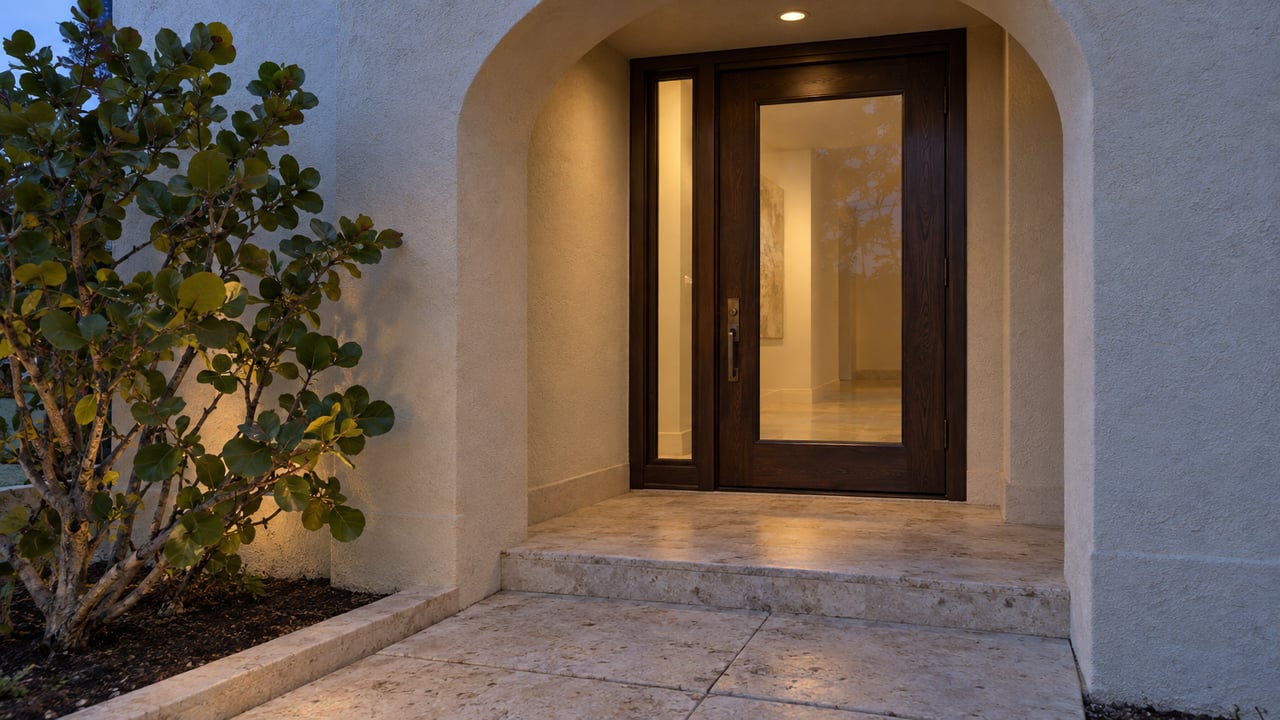
Mediterranean and Spanish-Mediterranean homes remain a natural fit for waterfront estates in this part of South Florida. Regional design guidance describes this style with deep shaded verandas, loggias, courtyards, arched openings, stucco walls, and layered outdoor spaces such as balconies and colonnades.
In Highland Beach, that vocabulary often translates well on larger homes that want a more formal and timeless presence. These properties can feel substantial and private while still offering generous outdoor living zones oriented to the water.
This style also works well for buyers who want a sense of permanence and softness rather than a sharper contemporary edge. When done well, it balances resort-style living with strong architectural structure.
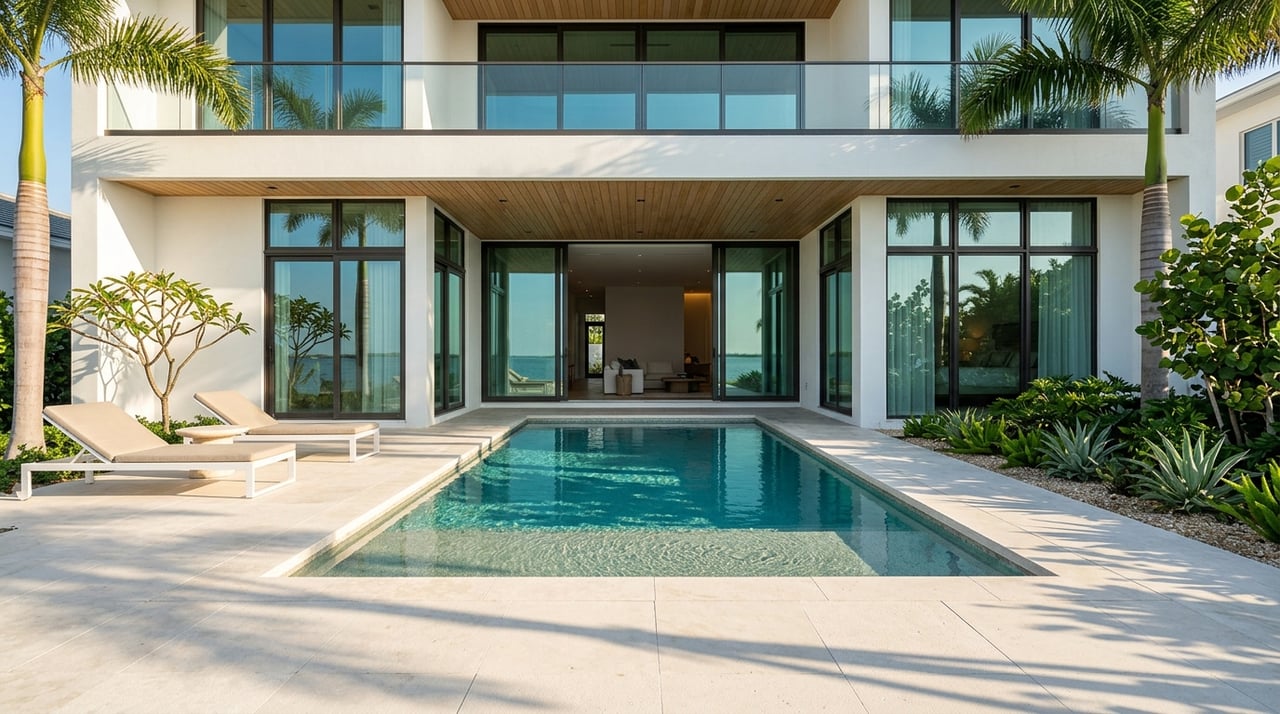
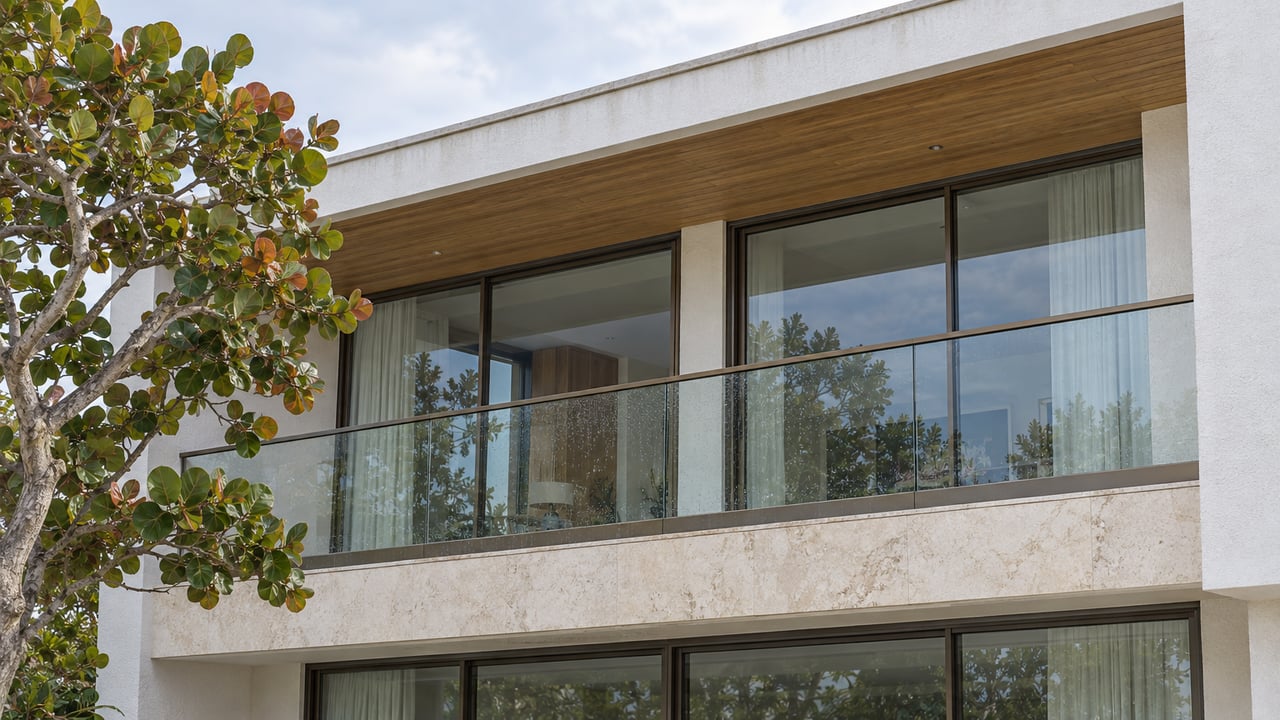
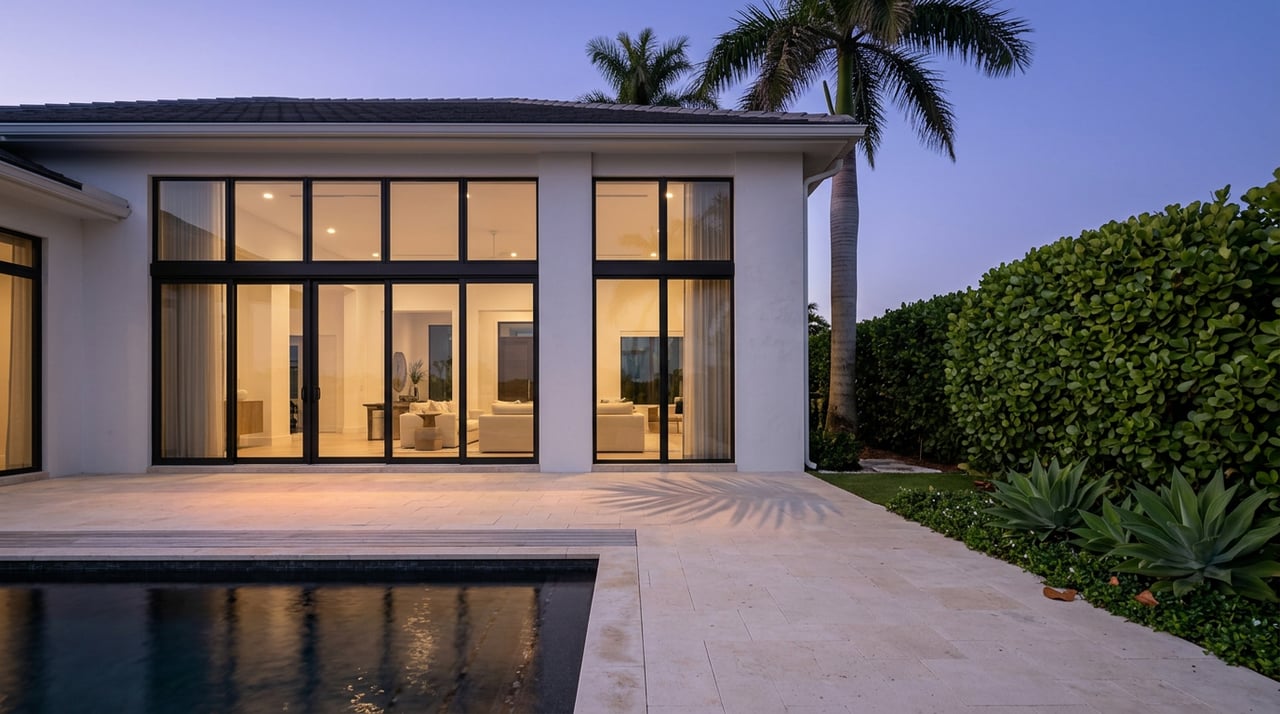
Modern waterfront homes in Highland Beach often emphasize open plans, strong horizontal lines, intentional asymmetry, and large expanses of glass. Regional design guidance also associates modern forms with flat or multi-level roofs, smooth stucco, exposed concrete, and a strong indoor-outdoor connection.
That aligns closely with how many luxury waterfront properties are presented locally. Features like floor-to-ceiling impact glass, wraparound terraces, split floor plans, and open entertaining spaces have become part of the modern coastal language.
For many buyers, this style offers the clearest link between architecture and view. It tends to prioritize light, openness, and a seamless relationship between interior rooms and outdoor terraces.
Florida-Bermuda design offers a softer tropical profile while staying disciplined in scale and form. Regional guidance describes it through rectilinear planning, U-shaped or L-shaped layouts, hip or pyramidal roofs, white cement tile roofs, shutters, and restrained ornament.
In Highland Beach, this approach can appeal to buyers who want something relaxed and coastal without going fully contemporary or heavily Mediterranean. It often feels tailored to the island setting because it supports a breezy, refined exterior expression without excessive visual weight.
This design language can also work especially well where scale control and clean massing matter. On a narrow coastal site, restraint often reads as sophistication.
On a standard inland lot, architecture may focus mostly on curb appeal and interior flow. On the water in Highland Beach, the design brief becomes more complex.
The town’s comprehensive plan states that Highland Beach will prevent construction and site improvements that intensify hurricane damage and will require applicable permits before building in the coastal high-hazard area. The same plan notes that if a structure is damaged in excess of 50 percent of its value, it should be rebuilt to current codes.
That context shapes what buyers tend to value most. In this market, durable construction and design clarity often matter as much as aesthetics.
Homes that present well over time often pair a clear architectural identity with resilient features. Based on the local code environment and recurring property marketing language, buyers will often see impact-rated glass, durable exterior finishes, and roof and wall systems suited to coastal exposure highlighted as meaningful selling points.
This does not mean every property looks the same. It means the strongest homes usually combine style with practical performance in a way that feels intentional rather than improvised.
If you are evaluating a home for both enjoyment and resale, that combination is worth paying attention to. A beautiful waterfront property should also look prepared for its setting.
In Highland Beach, the lot plan is not separate from the architecture. It is part of the architecture.
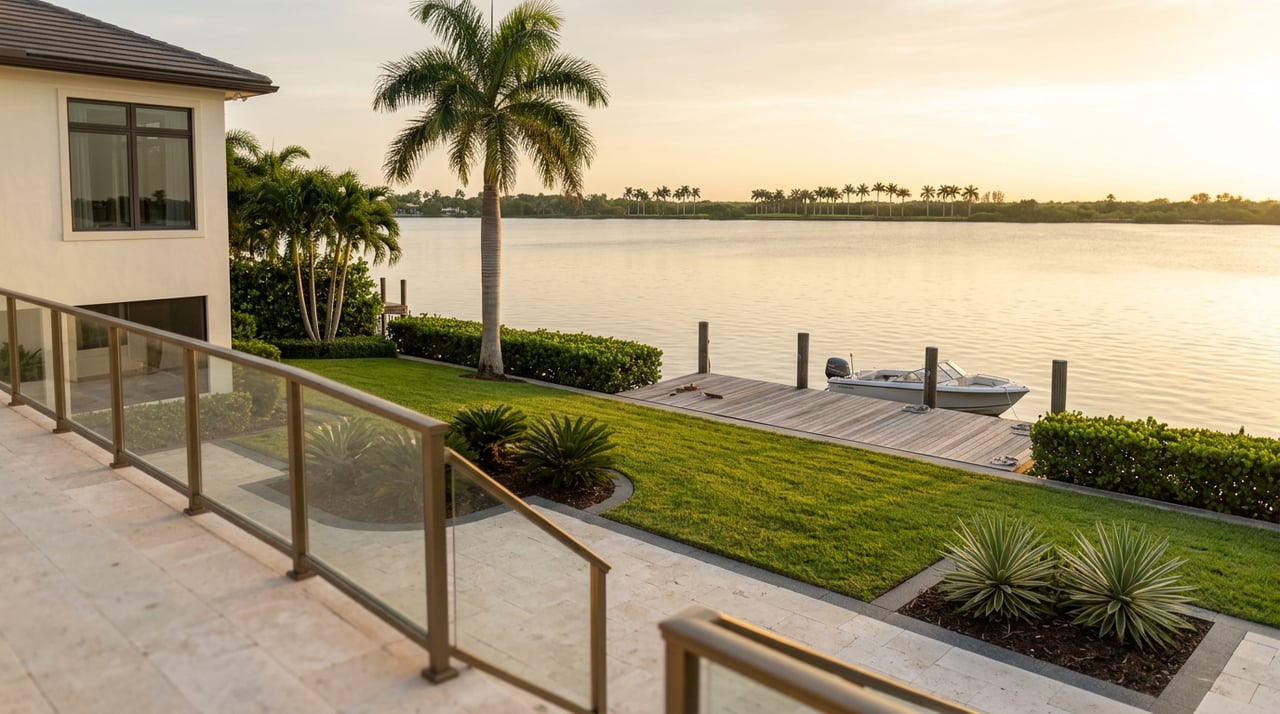
The home’s placement, relationship to the seawall, circulation to docks or beach-facing areas, drainage planning, and the layout of terraces or pool decks all affect how the property lives day to day. On a barrier island, a smart site plan can improve privacy, views, and functionality at the same time.
This is one reason the best waterfront homes often feel effortless even when the constraints are significant. Good planning makes complex sites read as calm, elegant, and easy to use.
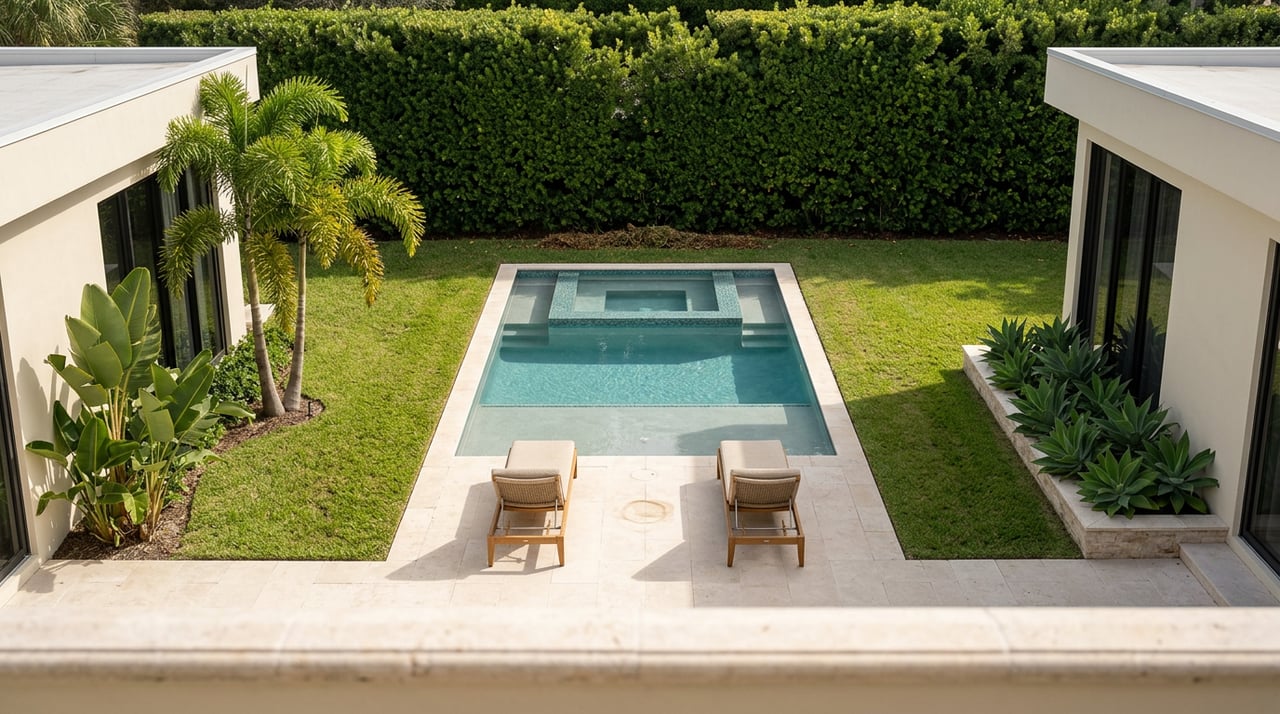
In Highland Beach, exterior spaces are not secondary amenities. They are a central part of the home’s value and experience.
Local waterfront listings consistently highlight features such as private docks, summer kitchens, infinity pools, balconies, terraces, and private beach access. That repeated pattern shows how outdoor space is understood here, not as bonus square footage, but as part of the home’s everyday utility and luxury.
For buyers, this means you should assess outdoor areas with the same care you give kitchens and primary suites. A well-designed terrace or dock approach can meaningfully shape how a home feels and functions.
Landscaping also plays a larger role on waterfront lots than many buyers expect. Regional design guidance notes that rear yards along the Intracoastal are visible from opposing lots and roadways, which means landscape design contributes directly to the property’s overall presentation.
Highland Beach also points residents to Florida-Friendly Landscaping guidance, and the town regulates irrigation year-round. That helps explain why lower-maintenance and salt-tolerant planting palettes are common in the area.
For you as a buyer or seller, this matters in two ways. First, landscape design can support privacy and visual polish. Second, a thoughtful, lower-maintenance approach may align better with the coastal environment and ongoing upkeep needs.
In Highland Beach, resale strength appears less tied to one style label and more tied to how well a property handles the realities of waterfront living. The strongest homes usually combine refined design with practical durability, easy indoor-outdoor flow, and a layout that takes full advantage of light and views.
That is why many appealing properties share a similar set of traits even when the architecture looks different. Impact glass, updated kitchens and baths, flexible entertaining spaces, terraces, and water-oriented amenities show up again and again in local marketing because buyers respond to them.
In other words, the most compelling waterfront homes do more than look impressive in photos. They feel coherent, usable, and well matched to Highland Beach’s coastal setting.
If you are touring or comparing properties, it helps to look beyond the style name and focus on how the home performs as a waterfront design.
Here are a few practical points to keep in mind:
The goal is not just to choose between modern and Mediterranean. It is to understand which home feels most complete for the way you want to live on the water.
Whether you are buying a waterfront estate or preparing one for sale, a design-led perspective can make a meaningful difference in how you assess value, presentation, and long-term appeal. If you want a thoughtful, highly tailored point of view on luxury homes across the Palm Beaches, connect with Tanya Ajay for a private consultation.
Stay up to date on the latest real estate trends.

Wether you are looking to buy, sell, invest or relocate to beautiful, sunny South Florida, let Tanya help you find you the home of your dreams.